

|
News |
||||||
| >> Get updates automatically by email << | ||||||
July 27th 2009 Dynamic Demand, in collaboration with friends at Demand Logic and AMEE, today launched a groundbreaking website that provides a live update on just how polluting or "carbon intense" UK electricity is at any given moment in time. The amount of carbon pollution associated with our use of electricity changes all the time because of the continually changing mix of renewables, nuclear and fossil-fuel generation on the grid. The new live feed, which can be read by both people and machines, opens up the possibility of redesigning appliances and buildings to avoid periods of high grid pollution. Dynamic Demand brought together the partnership to provide this exciting service thanks to a charitable donation. Visit www.RealtimeCarbon.org |
|
|||||
June 19th 2009 National Grid today included an outline assessment of the viability of dynamic demand in a report outlining up-coming issues for operating the UK grid. In a 60-page report, written to stimulate debate and seek industry views, National Grid described in detail how dynamic demand could be implemented in appliances, electric car charging, air conditioning and other applications. National Grid's interest in the dynamic demand approach, and their commitment to supporting tests, makes it even more important that we prepare the market now for effective incentive mechanisms to drive widespread adoption. See the report here
|
|
|||||
January 30th 2009 Prime Minister Gordon Brown today made supportive comments about dynamic demand in a speech to the World Economic Forum in Davos. He told the gathering of the world's finance leaders that the "contours" of a resilient low carbon recovery are likely to include: "a re-engineering of electricity grids alongside digital grids to enable dynamic demand and supply from diverse sources - the smart grids of the future" Mr Brown listed dynamic demand as number three in a series of six key measures likely to be included the Government's upcoming green industry strategy. Joe Short, Director of Dynamic Demand, said: "It is incredible to think how far this campaign has come in such a short time. In 2004, a small group of engineers and campaigners got together and decided that this carbon-saving technology was too important to be left in the sidelines. We came up with the name 'Dynamic Demand', secured charitable funding and set up the campaign. Just five years on, and the Prime Minister has recommended dynamic demand technology to the world's finance leaders as a key way to achieve a low-carbon economy." See full speech. |
|
|||||
January 16th 2009 Speaking at the launch of the Conservative's new green policy strategy, party leader David Cameron said the construction of a new £1bn smart grid would be central to the party's plans to transition the UK to a low-carbon economy. "We currently have a dumb 1960s grid and moving to a smart interactive one will help us create a decentralised energy revolution," he said. The Conservative Party plans to upgrade the grid to allow energy firms to turn off non-essential appliances automatically, such as washing machines and other white goods to cut peak loads (through technologies such as dynamic demand), also features feed-in tariffs to incentivise local electricity generation and would establish a national recharging network for electric cars, with the range of smart grid technologies “permitting in turn a huge increase in renewable power”. National Grid welcomed the Conservative Party’s green policy strategy saying, “Security of supply and climate change go hand-in-hand, so we are committed to looking at innovative ways of managing the national grid network such as smart grids, smart metering and dynamic demand (where fridges and other appliances can help balance supply and demand).” See a report on the launch from businessgreen.com. |
|
|||||
December 2nd 2008 UK Energy Minister Lord Hunt today welcomed an announcement by a leading energy supplier that it would be conducting a trial of ‘smart fridges’ in a test of dynamic demand technology. Npower is working with RLtec, a clean technology company, to trial a dynamic demand approach in 300 fridges. The trial will also demonstrate the potential of dynamic demand technology for reducing the UK’s carbon dioxide emissions. The trial is the first Demonstration Action to be approved by Ofgem under the CERT (Carbon Emissions Reduction Target) legislation and will contribute towards Npower’s carbon reduction obligations. CO2 savings from full implementation of dynamic demand refrigerators in the UK are estimated by Npower and RLTec at 2 million tonnes per year – more than the figures shown in the Department of Energy and Climate Change report issued on 21 November (see below). The campaign organisation Dynamic Demand welcomed this ground-breaking trial and the very important news that dynamic demand technologies are being considered as a potential "energy saving measure" under the Carbon Emissions Reduction Target (CERT) programme (the successor to the Energy Efficiency Commitment). Under this programme, energy suppliers must contribute to a pool of funding which is then used to reward suppliers who successfully bring about energy saving measures. These can be either direct energy saving measures, or so-called "actions" aimed at market transformation and demonstration. If the Ofgem assessment shows that dynamic demand technologies would provide services suited to CERT, this will mean that dynamic demand technologies will by financial incentivised in the marketplace to enable widespread uptake, which was a key aim of the Dynamic Demand project at its launch in 2005. See Ogem's fact sheet on CERT. Sample of media coverage relating to the Npower/RLTec trial: • 02/12/08 The Guardian, ‘UK set to trial 'smart fridges’ |
||||||
November 21st 2008 The government’s new Department of Energy and Climate Change today published a report assessing the potential for dynamic demand technology. The report, required from DECC under the terms of the Sustainable Energy and Climate Change Act, assesses dynamic demand for its potential to reduce carbon emissions and help balance the national electricity grid. The report provides an update on related research that has been carried out by the Centre of Sustainable Electricity and Distributed Generation, based at Imperial College, London and describes the next steps in the evaluation of this technology. The results indicate that:
The report also welcomed approval by the electricity regulator Ofgem of plans for a major electricity supplier to carry out a ‘demonstration action’ using refrigerators fitted with a dynamic demand technology. This project, will initially trial 300 refrigerators fitted with a dynamic demand technology, moving if successful to 3,000 refrigerators. It will be the first major demonstration of the technology in the UK and will provide the opportunity to build upon and verify the findings of previous research. The project will commence in 2009 and has a planned duration of 18 months with full results expected in the autumn of 2010. Publication of the DECC’s report is a very significant milestone for Dynamic Demand, the independent not-for-profit organisation dedicated to promoting the technology. Director of Dynamic Demand Joe Short said: “This government report marks the culmination of three years of campaigning by engineers, industry and the public for adoption of dynamic demand’s common-sense technology. It paves the way for a low-carbon electricity grid and much greater integration of renewable energy into the system. This is great news for all those working to combat climate change.” |
||||||
November 3rd 2008 ‘In search of the smart grid’ by Fiona Harvey, Environment Correspondent for the Financial Times. |
||||||
October 8th 2008 National Grid said today that it would boost investments by £2bn a year in its revised strategic plan aimed at boosting the reliability of the UK electricity transmission system as well as shaping up to tackle climate change and improve the UK's security of energy supplies. Announcing a series of “systems studies”, National Grid said that it would also be looking to a future with more flexible grid management, including power storage systems, smart meters and dynamic demand. See full coverage at newenergyfocus.com. |
|
|||||
October 8th 2008 See the full story in New Scientist. |
||||||
19 September, 2008 ‘Dynamic demand response could do away with costly balancing capacity’ See full story. |
||||||
September 11th 2008 Former president of the Chartered Institution of Building Services Engineers Terry Wyatt has stated that he believes progress is too slow on preparing for the large-scale uptake of renewable generation. He believes the Department for Business, Enterprise and Regulatory Reform (BERR) must be forced to reduce pressure on the grid through the introduction of dynamic demand management. He made his comments as Berr confirmed it had missed its August deadline for issuing a report on the viability of dynamic demand management. If implemented in full, dynamic demand management would require manufacturers to include electronic controllers in domestic and industrial appliances, such as fridges, air conditioning and heating systems. Mr Wyatt, a partner at Hoare Lea and special professor of Building Services Engineering at the University of Nottingham, added: “A directive from the European Union requiring dynamic demand management, smart grids and incentivising tariffs is essential and urgently required. And this is needed across Europe, as few governments have sufficient control over their electricity industries.” See report in Heating & Ventilation News.
|
||||||
August 2008 Nation's fridges "could cut need for 2GW power plant" See full story. |
||||||
June 5th 2008 ‘Fridges of the world, unite!’ - smarter appliances that turn themselves down at times of peak demand should mean fewer brown-outs. See full story. |
||||||
|
August 20th 2007 Following three years of promotional activity by Dynamic Demand, the Government has today announced a commitment to fund research into the technology. Dynamic demand is the use of low-cost electronics fitted to appliances such as refrigerators and freezers, so that they time their electricity consumption in response to conditions on the National Grid, creating a national energy-storage solution. The announcement, in the form of a 12-page report from the Department of Business, Enterprise and Regulatory Reform (previously DTI), commits the Government to paying for research into the potential carbon savings the technology would bring if introduced onto the UK grid. Although the report makes no direct promises in terms of providing economic incentives, it importantly makes several specific suggestions for how take-up of the technology could be supported by policy, once the carbon benefits are proven. This includes the possibility of incentivising appliance manufacturers to make dynamic demand appliances by inclusion in the new CERT (Carbon Emissions Reduction Target), the successor to the previous EEC (Energy Efficiency Commitment) measures. The Minister's report was produced in response to an Act of Parliament promoted last year by sustainable energy groups including Dynamic Demand and widely supported through letters and emails sent by hundreds of supporters of greener energy and better demand-side management. Joe Short, Director of Dynamic Demand, said: "We are delighted the Government has decided to explore the potential of dynamic demand technology. The UK's fridges and freezers could one day become a valuable energy-storage system for the grid, acting like a big battery, able to defer hundreds of megawatts of power-demand for an hour or more. If you consider the levels of wind power we shall need in order to tackle climate change, dynamic demand could play a key role in helping to stabilise the power grids of the future. The research the Government has announced today will tell us exactly what carbon savings may result and therefore what financial incentives providers of the technology, such as appliance manufacturers, can expect in the future. Today's announcement of research funding from government is a vital next step for dynamic demand." Energy minister Malcolm Wicks said: "It is very early days and we don't want to overstate it but dynamic demand does merit further research. As well as increasing the efficiency of our grid network it could ultimately prove to be an innovative tool in reducing our greenhouse gas emissions and fighting climate change." National Grid Chief Executive Steve Holliday said: "National Grid is constantly looking for innovative ways to use our energy networks to tackle climate change and ensure security of energy supply. Dynamic demand is an exciting possibility for the future which we are already looking at, which could help us manage peaks in energy consumption, reduce emissions and support the use of variable renewable energy sources such as wind power. We are looking forward to working with BERR on this important project." See the Government's ress release. Download a copy of the Government's report. |
||||||
|
July 31st 2007 A scientific paper on dynamic demand has been published in the Transactions on Power Systems journal which is issued by the Institute of Electrical and Electronics Engineers (IEEE). The paper outlines results of computer simulations designed to examine how a large population of dynamic demand appliances would likely behave on the National Grid. The paper concludes: "It has been shown that an aggregation of a large number of dynamically controlled loads has the potential to provide significant added frequency stability to power networks, both at times of sudden increase in demand (or loss of generation) and during times of fluctuating wind power." The paper goes a long way towards showing that dynamic demand could be appropriate and beneficial for the UK grid system. The next step is to conduct research into the precise carbon savings and system impacts, and to ensure a market is created through an appropriate incentive mechanism and standard. See an abstract of the paper here. (If you are a member of the IEEE, you can download the full text. If not, please get in contact as we are able to share the work for collaborative purposes.) The citation for the paper is: 'J. A. Short, D. G. Infeld, and L. L. Freris, "Stabilization of grid frequency through dynamic demand control", in Power Systems, IEEE Transactions on, vol. 22, no. 3, Atlanta, GA, Aug. 2007, pp. 1284-1293.' |
|
|||||
|
June 27th 2007 A summary paper on dynamic demand was presented at the annual meeting of the Power Engineering Society in Tampa, Florida. The paper was well received and stimulated a healthy debate about possible incentive mechanisms and further research. Also at the meeting were academics from the University of Denmark, where the concept is being explored in partnership with Denmark's electricity transmission operator as a possible mechanism for helping to incorporate large amounts of wind onto Denmark's grid. Since Dynamic Demand began promoting the use of using cold appliances to help with demand management, the concept is now being explored in several universities. |
|
|||||
|
December 13th 2006 The Market Transformation Programme has published the results of lab tests of a working proof-of-concept dynamic demand refrigerator. The tests were conducted at Intertek, the laboratories often used by Which? magazine. Results show that dynamic demand control has no significant negative impacts on appliance operation or food temperature even though it was continuously providing load-balancing for the national grid. Download the full report from the MTP (pdf 280Kb). |
|
|||||
|
November 2006 Dynamic Demand has completed its funded phase of work which was kindly supported by a start-up grant from the Esmee Fairbairn Foundation. Discussions are now underway with industry and academic organisations on how best to support the next phase, which is hoped will focus on identifying the carbon-saving potential of the technology, possibly through a combination of computer modelling and trials of real appliances. |
||||||
|
September 19th 2006 The Liberal Democrat party today passed a motion at their annual conference recommending dynamic demand as part of a suite of decentralised energy solutions. The motion, which was "clearly passed", recommended that the Government regulator Ofgem should reform the rules governing electricity contracts to encourage investment in the technology. See the Liberal Democrat motion to conference. |
|
|||||
|
July 11th 2006 The Government's 2006 Energy Review, published today, mentions dynamic demand as a possible solution for helping to incorporate renewable energy onto the UK grid, and points to further research into the technology. The report, called "The Energy Challenge", cites dynamic demand (Annex E, Renewable Grid Issues, page 212, point 25) as a promising strategy for “managing variability and capacity contribution of renewable generation”. Point 26 of the report adds: “The Government accepts that further research into technical and commercial issues may be useful here”. This encouraging step paves the way for a favourable response to research proposals that would seek to address these needs.See the Government's Energy Review website. Download the full report from the DTI (pdf 2600Kb). |
|
|||||
|
June 20th 2006 A clause on dynamic demand becomes law tomorrow. The Climate Change and Sustainable Energy Bill, which carries a clause requiring the Government to report on the potential for dynamic demand technologies, passed its final stage in Parliament today. Tomorrow it will receive “royal ascent” and become part of UK legislation. The Bill requires the Government to publish, within 12 months, a report outlining what potential it sees for the technology and, if appropriate, what steps Government should take to promote it. In addition to supporting dynamic demand, the Bill carries a host of other climate change measures including better support for microgeneration and annual reporting on emissions. The Bill was introduced by Mark Lazarowicz MP and has been backed by an alliance of environmental organisations and trade associations, acting through the Sustainable Energy Partnership. On dynamic demand technologies, the Bill says: "(1) The Secretary of State must, not later than 12 months after this section comes into force, publish a report on the contribution that is capable of being made by dynamic demand technologies to reducing emissions of greenhouse gases in Great Britain. (2) The report must state the view of the Secretary of State as to whether it is appropriate to take any steps to promote the use of such technologies, and, if it is, what those steps are. (3) In forming the view mentioned in subsection (2) the Secretary of State must have regard, in particular, to any matters which would prohibit or inhibit the use of any dynamic demand technology in any circumstance in which its use could be expected to make a contribution to reducing emissions of greenhouse gases in Great Britain; and the report must state the matters to which he has had regard.” See explanatory notes to the act published by Parliament.
|
||||||
|
May 12th 2006 The Bill containing a clause on dynamic demand has passed its Third Reading in the Commons today. We are now confident that this will soon become law. The Climate Change and Sustainable Energy Bill contains a clause committing the Government to assessing the carbon saving potential and viability of dynamic demand and reporting on what barriers may need to be removed for its widespread adoption. This is a major step forward in the promotion of dynamic demand. |
||||||
|
April 2006 Friends of the Earth has recommended investment into dynamic demand technology as a climate change solution in its response to the Government's Energy Review. The pressure group also cited the technology in its latest briefing paper, How to get our climate-changing emissions under control, published in February. Download FOE's response to Government. (pdf 180k) Download FOE's climate change paper. (pdf 270k)
|
|
|||||
|
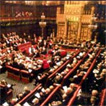
March 24th 2006 Lord Redesdale, Lords Energy spokesman for the Liberal Democrats, today introduced his Dynamic Demand Appliances Bill for its second reading in the House of Lords. Speaking for 10 minutes on the technology, Lord Redesdale urged government to make resources available to properly assess the environmental and system benefits of dynamic demand and to start to investigate ways to drive the technology with an appropriate incentive. During the debate that followed the speech, Lord Sainsbury of Turville (Parliamentary Under-Secretary, Department of Trade and Industry) said he believed dynamic demand could make a contribution to energy efficiency. He added that government was happy to make resources available to report on the potential of the technology as required by a separate Bill making its way through the House of Commons, the Climate Change and Sustainable Energy Bill (due for its 3rd reading on May 12th). Read Lord Redesdale's speech and the full debate here. |
|
|||||
|
March 20th 2006 A lunchtime meeting was held today at the House of Lords to discuss the potential of dynamic demand technology and likely next steps. The meeting, which was sponsored by WhitbyBird engineers and hosted by Lord Redesdale, was attended by over 30 representatives from organisations likely to be involved in the testing and future roll-out of the technology. Attendees included system operators, refrigerator manufactures, Government officials, component manufacturers and regulators. Discussions at the meeting also included how to conduct the necessary trials to verify the technology, and what technical and policy questions would need to be answered by future work. |
|
|||||
|
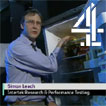
March 19th 2006 Dynamic Demand was today featured on Channel 4 News in a 3-minute Special Report covering the latest laboratory tests being undertaken to assess the viability of the technology. Channel 4 reporters interviewed both Dynamic Demand and also the Senior Scientist at Intertek where the lab tests are being carried out. The test are being funded by the Market Transformation Programme, an initiative from Defra (Department of Environment, Food and Rural Affairs). Although the results from the test are not yet published, early signs are that running under dynamic demand control would have no significant negative impacts on appliance operation or food temperature. See the full TV report here.
|
dynamic demand laboratory test |
|||||
|
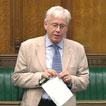
March 17th 2006 The Climate Change and Sustainable Energy Bill, which contains a clause committing the Government to assessing the viability of dynamic demand, succeeded in passing its "report stage" in the House of Commons today. The Bill, tabled by Mark Lazarowicz MP, is now thought to have a good chance of becoming law, maybe as soons as July this year. If this happens, Government will be required to report within 12 months of the passing of the Bill on the potential for the technology to save carbon and on what market barriers would need to be removed for it to become widely adopted in the UK. Last Friday, despite being supported by all parties including the Government, the Bill was put in jeopardy by two MPs acting individually to use up the limited Parliamentary time alloted for debate. However today, thanks to rigorous campaigning all week by many supportive individuals and organisations, the Bill succeeded to be debated and will pass to its 3rd reading. Dynamic Demand would particularly like to thank all those who receive our regular email updates and who wrote emails in support of the Bill. |
speaks in the Commons |
|||||
|
March 17th 2006 Dynamic Demand made national radio this morning as a news item on the Today Programme, the influential news and current affairs programme on BBC Radio 4. BBC reporter Roger Harrabin neatly summarised the technology and the latest work in Parliament to promote it. You can hear his short bulletin here (mp3 1.2MB). |
|
|||||
|
16th January 2006 A Parliamentary Bill urging the Government to put its weight behind dynamic demand control is being tabled in the House of the Lords today. The Dynamic Demand Appliances Bill is being introduced by Lord Redesdale, Liberal Democrat Energy Spokesman for the House of Lords. Lord Redesdale is a keen advocate of renewable and energy efficiency technologies and is actively supporting dynamic demand in Parliament. The Bill calls on the Government to set up a standard for dynamic demand appliances and make provision for an incentive mechanism which would reward manufacturers who meet the standard. See the press release (PDF 120 KB) |
|
|||||
|
9th January 2006 A dynamic demand refrigerator will soon be tested in an independent laboratory funded by the Government. The test will provide an assessment of whether refrigerators under dynamic demand control (timing their power consumption in response to grid frequency) can be designed to reduce electricity demand during peak periods whilst also maintaining high standards. The work will be conducted by scientists at Intertek and will be funded by the Government’s 'Market Transformation Programme' or MTP. The MTP is run by the Department for Environment, Food and Rural Affairs (Defra). Its job is to push for progress towards sustainable products by encouraging sustainable innovation and energy efficiency. One of Intertek’s roles is to provide independent assessments for energy efficiency labelling. The test will be designed primarily to discover whether operating under “dynamic demand control” affects the normal operation of the appliance. For two weeks, a set of appliances will be tested under standard laboratory conditions to establish a host of operating characteristics such as overall energy consumption and variations in food temperatures. For a further two weeks, the appliances will be operated under dynamic demand control, whereby they will bias their consumption of electricity so as to consume most power during times of excess generation on the National Grid. The two runs will be compared in detail to assess any changes. To receive an email update about progress of this research, click here |
||||||
|
11th November 2005 The Management of Energy in Buildings Bill was debated in Parliament today. It did not pass its second reading due to lack of time. However, work leading up to the debate has generated significant interest in dynamic demand technologies among policy-makers. The Bill, which was introduced by Alan Whitehead MP, contained several clauses to help alleviate climate change and included a clause committing the Government to investigating the potential for dynamic demand control in the UK. Despite there being well over 100 MPs in the House, enough to defend the Bill should it have been moved to a vote, it failed to gain enough time in the House to pass its second reading. However, the Climate Change and Sustainable Energy Bill, introduced by Mark Lazarowicz, did manage to pass as it was earlier in the running order. The two Bills were in fact being supported together as a package by the many groups advocating a faster adoption of green energy technologies. Although it is obviously a shame that Alan Whitehead's Bill will now not become law, there remains every hope for dynamic demand being supported by legislation in the near future because the clause was unopposed by any party. Thanks must go to everyone who wrote to their MPs in support of the two Bills. To have more than 100 MPs in the House on a Friday was a major success, and to have got this far has already helped in the promotion of dynamic demand in many sectors. |
|
|||||
|
4th November 2005 A Parliamentary Bill containing a clause on Dynamic Demand will be debated in the House of Commons on Friday 11th November, less than a week away. There is still time to write to your MP and ask them to turn up to defend the Bill. |
|
|||||
|
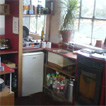
27th October 2005 The first refrigerator to be operated under dynamic demand control was found to operate satisfactorily whilst also managing its electricity demand so that it tended to consume its power mainly during periods of excess generation on the power grid. Dynamic demand control works by tracking the "50Hz" system frequency of the electricity grid, which drifts a little whenever there is a slight imbalance between supply and demand. The test, which was conducted at The Hub, a busy shared working space in North London, was extremely encouraging, indicating that the aggregated behaviour of many such appliances could provide a valuable service to the National Grid. See results from the test. (PDF 215k) See the current UK system frequency. |
dynamic demand fridge at The Hub |
|||||
|
17th August 2005 Energy Minister Malcolm Wicks has written to Dynamic Demand asking for a departmental briefing on the technology. The Department for Trade and Industry would like to know more about the potential for dynamic demand control to provide energy storage, an issue that is rising up the agenda as more variable renewable generation is connected. This is an encouraging step, as it makes it more likely the Government will play a key part in proving the case for dynamic demand and bringing together the various sectors necessary for its implementation. |
||||||
|
20th July 2005 A news item on dynamic demand appeared in this week's New Scientist magazine. |
|
|||||
|
14th July 2005 A clause on dynamic demand has been included in a new Private Members Bill in Parliament. If the Bill becomes law, it will commit the Government to investigating the potential environmental benefits of the technology and what needs to be done to ensure it gets adopted. The "Management of Energy in Buildings" Bill is being introduced by Alan Whitehead MP and is due to come up for debate in the House of Commons on November 11th. It introduces several carbon-saving measures including support for micro-scale renewable energy projects as well as dynamic demand. YOU could help this Bill become law... The success of the Bill in the end will depend on numbers. If enough MPs show their support, and turn up for the debate, it has a good chance of becoming law. |
|
|||||
|
22nd June 2005 A Parliamentary petition on dynamic demand was started today in the House of Commons. The petition, called "Early Day Motion 388", introduces the possibility of electrical appliances being used to deliver essential grid-balancing services. It was tabled by Colin Challen MP who takes a special interest in climate change and energy issues. Early Day Motions remain in Parliament for the current session and are a way of stimulating interest in the House in new and important topics. If enough MPs sign in support of dynamic demand, it will help us make the case for future Government invovement. See
the text of EDM 388 and who has signed so far! Has your MP signed? Ask them or thank them here. |
|
|||||
|
16th May 2005 A new report from Dynamic Demand shows that significant carbon dioxide emission reductions could result from an introduction of dynamic demand control on the UK grid. The estimated saving, 2.1 million tonnes of CO2 (0.6 million tonnes of carbon) per year, is 25% of that which would be achieved if the government met its 10% renewable energy target. The reduction would be due to the technology replacing some traditional forms of back-up generation on the grid, which are currently inefficient and carbon-intensive. Download report. (PDF, 70K) |
 |
|||||
|
4th April 2005 Dynamic Demand has moved to a shared office environment in Islington. "The Hub" is a collective of organisations and individuals working on sustainability and other social issues. |
 |
|||||
|
24th January 2005 Thanks to support from the Esmée Fairbairn Foundation, Dynamic Demand has now been formally established as a not-for-profit organisation. The funding is for an 18-month public interest campaign to promote the technology amongst key policy makers. More information is available from the newly updated website at www.dynamicdemand.co.uk. |
||||||
|
21st June 2004 On 17th June, Brian White's Dynamic Demand amendments were discussed in the Commons. Supported by Andrew Stunell (Liberal Democrat Energy Spokesman), Mr White's involvement resulted in a statement of support for the technology from the Minister. It is extremely positive to have this sort of Government endorsement so early in our campaign. The Minister (Nigel Griffiths MP, Under-Secretary of State for Small Business, DTI) said: "I certainly believe that it is important to explore the role of dynamic demand management as part of the strategy. I am happy to give that commitment. We are actively considering the complete role, and there will certainly be an opportunity during the consultation period to consider when dynamic demand management will play a role and how it can play a role in meeting our carbon reduction aims. I am grateful to the hon. Gentleman for raising that point and allowing me to set out the Government's position clearly." Read the full debate. |
||||||
|
15th June 2004 Brian White, MP for North East Milton Keynes, has tabled our probing amendment to the Energy Bill which calls on the Government to consider Dynamic Demand technologies. A probing amendment is not intended to become law. It is a tactic for flagging up new issues to the House of Commons which may require legislation or Government support later on. See the press release. (PDF, 100k). See the text of the amendment. (do a text-search for "dynamic demand") |
||||||
| Register for regular email updates | ||||||
|
|
||||||




















Dynamic Demand is an independent not-for-profit organisation
set up by a grant from the Esmée
Fairbairn Foundation and supported by charitable donations.